Every summer, somewhere between the Fourth of July and Labor Day, the Front Range sky turns that flat orange-gray and the whole neighborhood smells like a campfire nobody lit. When the haze settles in, our phones fill up with the same questions about wildfire smoke and HVAC in Colorado: should the AC run, which filter actually helps, and does the house need duct cleaning once the smell fades.
Fair questions, because your heating and cooling system is either your best defense against smoke or the machine actively pulling it indoors — depending entirely on how you run it during those hazy weeks.
This guide gives you straight answers: what smoke does inside a house, the exact settings to use during an air quality alert, which MERV rating earns its keep against smoke, and honest advice about when duct cleaning helps and when a ten-dollar filter change does the same job.
What Wildfire Smoke Actually Does Inside a House
The part of smoke that matters is not the smell — it is PM2.5, particles smaller than 2.5 microns. That is roughly one-thirtieth the width of a human hair, small enough to slip past your nose and throat and land deep in the lungs. The EPA identifies PM2.5 as the main health threat in wildfire smoke, and it is why smoky days hit kids, older folks, and anyone with asthma or heart trouble hardest.
Here is the uncomfortable truth: houses leak. Even with every window shut, outdoor air works its way in through gaps around doors, can lights, plumbing penetrations, and attic bypasses. During a multi-day smoke event, indoor PM2.5 climbs toward outdoor levels unless something is actively filtering the air. Denver's older bungalows, with their original windows and balloon framing, leak far more than a tight new build in Castle Rock — which is why two neighbors can have very different air on the same smoky day.
That "something actively filtering" is usually your furnace or air handler. Which brings us to the biggest question we get.
Should I Run the AC During Wildfire Smoke?
Yes — run it. A central air conditioner in a typical Colorado home recirculates indoor air; it does not pull outdoor air in through the refrigerant system. Every pass through the return pulls air across your filter, so the more the blower runs, the more smoke particles get caught. Shutting the system off just lets particles float and settle on every surface you own.
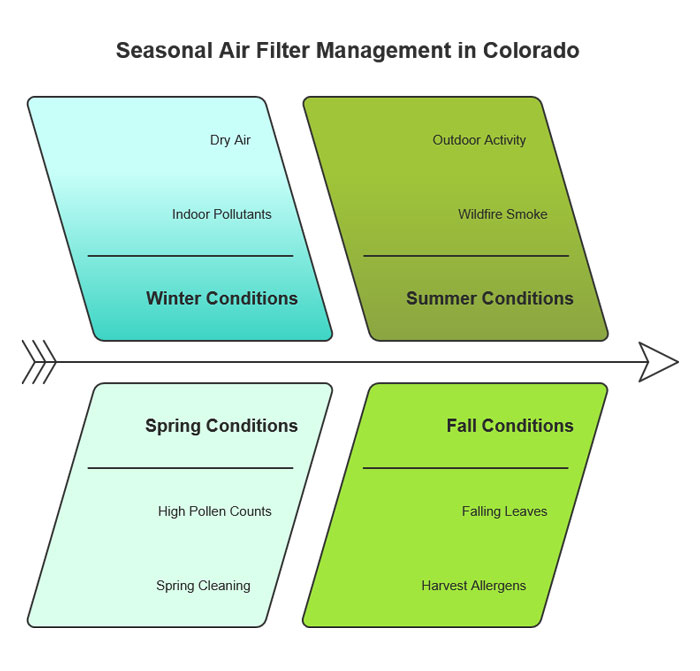
Three settings matter during a smoke event:
- Cooling on, windows shut. Let the system do the filtering instead of your lungs.
- Fan set to ON, not AUTO. Continuous blower operation keeps air moving through the filter even between cooling cycles. It costs a little electricity and captures a lot more smoke.
- Close any fresh-air intake. Some newer systems have a ducted outdoor-air intake or an energy recovery ventilator. During heavy smoke, switch these off or close the damper so you are not piping smoke straight into the ductwork.
"During the worst smoke week last summer, the cleanest houses we walked into all had one thing in common: the fan switch flipped to ON and a decent filter that got changed when it grayed out. Nothing fancy — just run the machine." — the Elite Air Duct crew
If your AC is limping and you have been putting off a repair, smoke season is the wrong time to be without it. Our AC repair team can get you running before the next haze rolls through.
The Swamp Cooler Problem Nobody Warns You About
Here is the Colorado quirk: evaporative coolers — swamp coolers — work by pulling large volumes of outdoor air through wet pads and pushing it into the house. On a normal dry July day, that is cheap, effective cooling. On a smoky day, it is a smoke pump. The pads knock down some larger particles, but they do very little against PM2.5.
If you cool with a swamp cooler and the air quality tanks, your real options are limited: shut it down during the worst hours, run a portable HEPA cleaner in the rooms you live in, and ride it out. Plenty of older homes in Denver, Englewood, and Aurora still cool this way, and smoke season is the single strongest argument we hear for eventually switching to refrigerated air. If you are weighing that move, our HVAC services and pricing guide covers what the change actually involves.
What MERV Rating Captures Wildfire Smoke?
MERV 13 is the honest answer. That is the rating where a filter starts capturing a meaningful share of particles in the PM2.5 range, and it is what the EPA points to for smoke events. A standard MERV 8 pleated filter — the hardware-store default — catches dust and pollen fine but lets most smoke sail through.
The catch is airflow. A MERV 13 filter in a 1-inch slot is dense, and some older blowers strain against it, especially if the ductwork is undersized. Practical guidance:
- Newer system, 1-inch slot: a quality MERV 13 pleated filter usually works. Check it every few weeks during smoke season — it loads fast.
- Older system or airflow complaints: stick with MERV 11 in the 1-inch slot rather than choking the blower, and add a portable HEPA cleaner in bedrooms.
- Best setup: a 4-inch media cabinet at the air handler. The extra pleat surface delivers MERV 13-16 filtration without the airflow penalty, and one cartridge rides out a whole fire season.
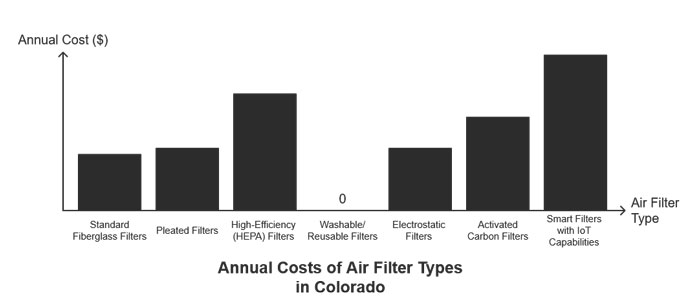
For the full price breakdown on filter types and what upgrading to a media cabinet costs, see our air filter replacement cost guide.
"A MERV 13 filter after a smoky August looks like it spent a year in a wood shop — gray through and through. That gray is smoke that stayed out of your lungs. Cheap insurance at fifteen bucks." — the Elite Air Duct crew
AQI Levels: What to Do With Your HVAC
Check AirNow.gov, the EPA's air quality site, before you change anything — it reports the actual AQI for your zip code, not a guess based on how the sky looks. Then match your response to the number:
| AQI level | What to do with your HVAC |
|---|---|
| Good (0-50) | Normal operation. Open windows at night if you like the cool air. |
| Moderate (51-100) | Normal operation. Sensitive folks close windows; everyone else carries on. |
| Unhealthy for Sensitive Groups (101-150) | Windows shut, AC on, fan to ON. Close fresh-air intakes. Check your filter. |
| Unhealthy (151-200) | Everything above, plus run portable HEPA cleaners in bedrooms. Skip the swamp cooler. |
| Very Unhealthy (201-300) | Seal up, filter continuously, limit door traffic, avoid frying or burning candles indoors. |
| Hazardous (301+) | All of the above; consider one well-sealed "clean room" with a HEPA unit running around the clock. |
Your Smoke-Season Checklist
Before the season (June, ideally):
- Stock two or three filters at the highest MERV your system tolerates.
- Test the AC on the first warm week so a breakdown does not land mid-smoke-event.
- Locate your fresh-air intake or ERV control so you can close it fast.
During a smoke event:
- Windows and doors shut, AC running, blower fan ON.
- Check the filter weekly — smoke loads a filter several times faster than ordinary dust.
- Skip anything that adds indoor particles: frying, vacuuming with a bagless unit, candles.
After the season:
- Swap in a fresh filter — the loaded one has done its tour.
- Wipe returns and supply grilles where soot streaks collect.
- If smell lingers past a filter change and a good airing-out, keep reading.
Getting Smoke Smell Out of the House: Filter Change or Duct Cleaning?
Here is where we will talk ourselves out of some work. After a normal smoke season — a few hazy weeks, windows kept shut, system filtering all along — a fresh filter and a weekend of open windows once the air clears usually erases the smell. Smoke odor clings mostly to soft surfaces: carpet, drapes, upholstery. Cleaning your ducts will not fix a smell that lives in your sofa.
Duct cleaning earns its cost in specific situations: smoke was heavy and prolonged and the system ran without a decent filter; a swamp cooler pushed smoke through the house for weeks; there was a nearby fire with ash actually settling on the neighborhood; or you can see soot residue at the supply registers. In those cases, particles have coated the duct interior, and every blower cycle re-releases the smell. A proper residential duct cleaning removes the coating instead of masking it, and a ductwork inspection can settle the question with a camera before you spend a dime.
"We tell folks the same thing every September: show us the registers. If a white rag wipes clean, save your money and change the filter. If it comes back gray, that is the smell you keep noticing." — the Elite Air Duct crew
Frequently Asked Questions
Does running the AC bring in wildfire smoke?
No — a standard central AC recirculates indoor air and does not draw from outside. The exceptions are systems with a ducted fresh-air intake or ERV, which should be closed during smoke events, and evaporative coolers, which pull outdoor air by design.
What MERV rating do I need for wildfire smoke?
MERV 13 is the target for capturing PM2.5 smoke particles. If your system is older and struggles with a dense 1-inch MERV 13, run MERV 11 and add a portable HEPA cleaner, or upgrade to a 4-inch media cabinet that filters at MERV 13+ without restricting airflow.
How do I know when the smoke outside is bad enough to act?
Check AirNow.gov for your zip code. Once the AQI crosses 100, shut windows, run the AC with the fan on, and close fresh-air intakes. Do not judge by smell alone — PM2.5 can be elevated when the air smells fine.
Should I turn off my swamp cooler during smoke?
Yes, during heavy smoke. Evaporative coolers push outdoor air into the house and the pads do little against fine smoke particles. Shut it down during the worst hours and rely on portable HEPA units in the rooms you occupy.
Do I need duct cleaning after a smoky summer?
Usually not — a fresh filter and airing the house out handles a typical season. Duct cleaning makes sense after heavy, prolonged smoke exposure, swamp-cooler use during smoke, visible soot at registers, or a persistent smell that survives a filter change.
Breathe Easier Next Fire Season
Smoke season is part of life along the Front Range now, but a well-run HVAC system turns your house into the cleanest air in the neighborhood. If you want a filter upgrade sized to your system, a media cabinet installed before July, or an honest look at whether your ducts need attention after a rough summer, Elite Air Duct has been doing exactly this work since 2014 — licensed, insured, written quotes every time. Call (720) 551-5882 or request a free estimate, and a Broncos flag out front gets you 10% off.