You can see maybe two feet into your ductwork with a flashlight — past the register grille and into the dark. The other several hundred feet of it runs hidden through walls, floors, attics, and crawlspaces, and whatever is happening in there stays invisible until it shows up as a symptom: a room that never gets warm, a smell you cannot trace, or a utility bill that keeps creeping up.
A ductwork inspection removes the guesswork. Instead of assuming your ducts need cleaning, sealing, repair, or nothing at all, a camera goes in and shows you. For Colorado homes — where semi-arid dust, decades of settling, and busy crawlspace critters all leave their mark — an inspection is the difference between buying the service you need and buying the one somebody wanted to sell you.
How a Camera Duct Inspection Works
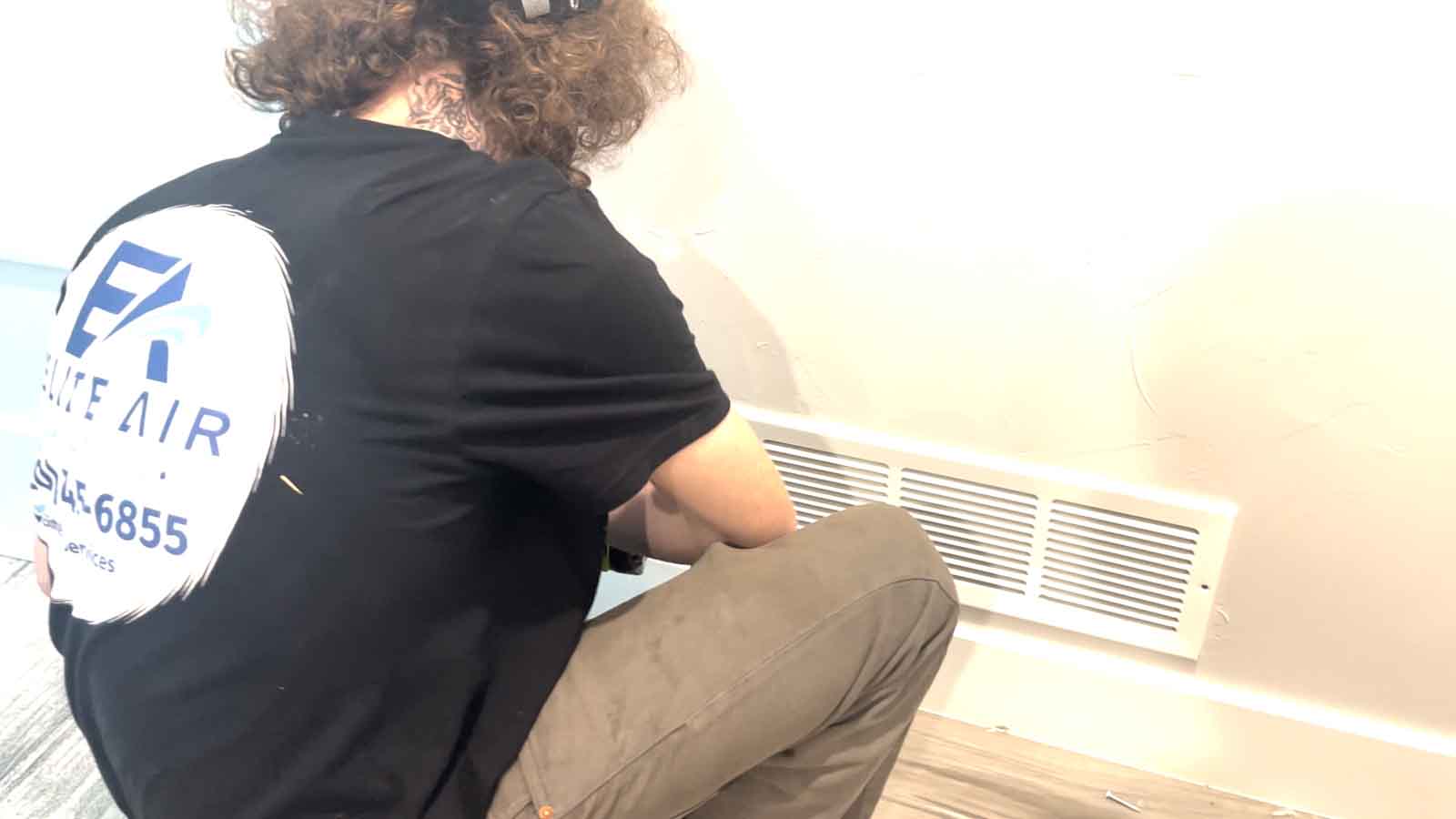
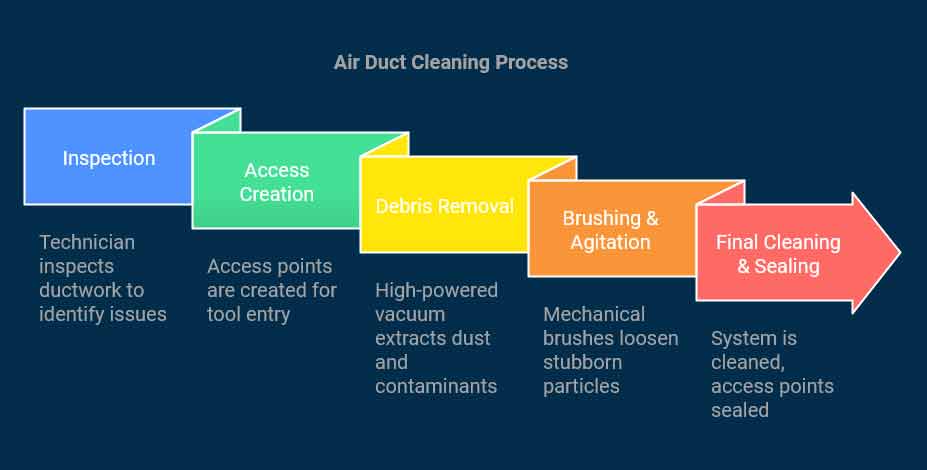
Modern duct inspection uses a small high-resolution camera on a flexible rod or a wheeled crawler, fed in through registers or access openings. The tech watches a live feed, records video, and captures stills of anything worth showing you. A thorough inspection also includes checking accessible runs by hand, measuring airflow at the registers, and looking over the plenums and connections at the furnace.
The whole point is evidence. You should never have to take anyone's word for what is inside your ducts.
"The camera ended the era of trust-me duct cleaning. We show homeowners the actual footage from their own ducts — sometimes it says 'clean these,' and sometimes it says 'save your money.'" — the Elite Air Duct crew
What a Ductwork Inspection Looks For
An experienced inspector is scanning for specific problems, each with its own fix:
- Leaks and gaps. Disconnected joints, failed tape, and unsealed boots leak conditioned air into attics and crawlspaces. ENERGY STAR estimates that in a typical house, 20 to 30 percent of the air moving through the duct system is lost to leaks, holes, and poor connections.
- Crushed or kinked flex duct. Flexible duct pinched by a stored box, sagging between supports, or kinked at a bend can choke a room's airflow to a fraction of design.
- Full disconnections. A supply line that popped off its boot may be heating a crawlspace instead of a bedroom — a surprisingly common find.
- Rodent and pest evidence. Droppings, nesting material, and chewed liner. Mice treat ductwork as a highway, and everything they leave behind sits in your airstream.
- Debris load. Construction dust, drywall powder, pet hair mats, and settled grime — the camera shows how thick it really is.
- Moisture and biological growth. Water staining, rusted duct sections, or growth that needs addressing at the source, not just cleaning.
- Insulation condition. Ducts in unconditioned Colorado attics lose heat fast when the wrap is torn or missing.
Inspection Findings and What They Mean
Not every finding calls for the same response. Here is how results typically map to next steps:
| What the camera finds | What it usually means | Typical fix |
|---|---|---|
| Thin, even dust film | Normal settling; filters doing their job | No action — re-inspect in a few years |
| Heavy debris, drywall dust, pet hair mats | Ducts overdue, often post-renovation | Full air duct cleaning |
| Droppings or nesting material | Active or past pest intrusion | Seal entry points, then clean and sanitize |
| Gaps, failed joints, disconnections | Paying to condition the crawlspace | Repair and seal — cleaning alone will not help |
| Crushed or kinked flex duct | The starved room's real problem | Re-route, re-support, or replace the run |
| Moisture, rust, or growth | A water source needs finding | Fix the source first, then remediate |
When to Inspect vs. When to Clean
Inspection and cleaning are different services, and the honest order is inspection first. The National Air Duct Cleaners Association (NADCA) suggests having ducts inspected regularly and cleaned as needed — for many homes that works out to a cleaning every three to five years, but the condition of your ducts matters more than the calendar.
An inspection makes particular sense when:
- You are buying a home and want to know what the ductwork hides before closing.
- One or two rooms never reach temperature no matter what the thermostat says — though it is worth ruling out a thermostat calibration issue too.
- You hear scratching or scurrying, or smell something you cannot locate.
- A renovation just wrapped up and you suspect the ducts swallowed the dust.
- Utility bills climbed without a rate change or weather to explain it.
- Symptoms match our guide to the signs your air ducts need cleaning and you want confirmation before spending.
"About one inspection in five, we find something the homeowner wasn't asking about — a supply line lying on the crawlspace floor, or a return pulling air from under the house. Cleaning wouldn't have touched the real problem." — the Elite Air Duct crew
Why Colorado Ductwork Earns Extra Attention
The Front Range works ducts harder than milder climates. Our semi-arid air keeps fine dust airborne much of the year, and June cottonwood season sends fibrous seed fluff into returns and equipment. Big temperature swings expand and contract duct joints season after season, loosening connections over decades. Crawlspaces and attics — where most metro-area ductwork runs — are exactly where mice head when the weather turns in October. And homes near open space or recent construction pull in far more particulate than the averages suggest.
Commercial buildings face all of this at larger scale, with longer runs and rooftop units; our commercial duct cleaning team scopes those systems the same way. And while the camera is out, it is worth checking the one duct that creates a fire risk when neglected: the NFPA consistently identifies failure to clean as the leading factor in home dryer fires, which is why dryer vent cleaning pairs naturally with a duct inspection visit.
Frequently Asked Questions
What does a ductwork inspection cost?
A standalone camera inspection along the Front Range typically runs modestly — often around one to three hundred dollars — and many companies, including us, credit or waive it when it leads to work. Either way, you get the footage and a written quote before anything else happens.
How long does a duct inspection take?
Plan on one to two hours for an average home. Larger homes, multiple systems, or tight crawlspace access add time.
How often should ductwork be inspected?
Every few years is a sensible rhythm for most homes, with a fresh look after any renovation, pest problem, roof or plumbing leak, or purchase of a new home. NADCA's guidance points to cleaning every three to five years as typical when inspection shows it is warranted.
Can leaky ducts really raise my bills that much?
Yes. With typical duct losses of 20 to 30 percent per ENERGY STAR, a leaky system means paying to heat and cool spaces nobody lives in. Sealing verified leaks is one of the better-returning fixes in home efficiency.
Do new houses need duct inspections?
More often than people expect. Construction debris — drywall dust, sawdust, fast-food wrappers — routinely ends up inside brand-new ductwork, and rushed installs leave kinked flex duct behind finished walls.
Look Before You Spend
The smartest money in duct work is spent on knowing what is actually in there. Elite Air Duct has been scoping and cleaning ductwork across the Denver metro since 2014 — licensed, insured, with camera footage and before-and-after photos on every job, and written quotes so the price never drifts. Call (720) 551-5882 or schedule a free estimate, and ask about the 10% Broncos-flag discount while you are at it.