Heating a home in Brighton isn't quite the same job as heating one in Denver. Out here on the metro's northeastern edge, houses sit farther apart, wind comes straight off the plains with nothing to slow it down, plenty of properties run on well water, and a gravel road can feed your furnace more dust in a season than a city system sees in three years.
If you're looking for furnace service in Brighton, CO, you want someone who understands those differences — because the maintenance schedule, the failure patterns, and even the parts that wear out first all shift once you leave the city grid. As the Adams County seat, Brighton mixes in-town blocks dating back a century, postwar and 1990s subdivisions, and semi-rural acreage east and north of town. Each needs its own approach.
Dust: The Number-One Furnace Killer on Brighton's Edges
On acreage properties and homes near gravel roads or working farmland, airborne dust is relentless. It loads filters in weeks, coats blower wheels until they lose their balance and their airflow, and works into motor bearings. Add a dog door and a couple of outdoor pets, and a furnace filter can be spent in twenty days.
"On acreage properties east of town, dust is the furnace killer. Not the cold — the dust. Blower motors choke on it." — the Elite Air Duct crew
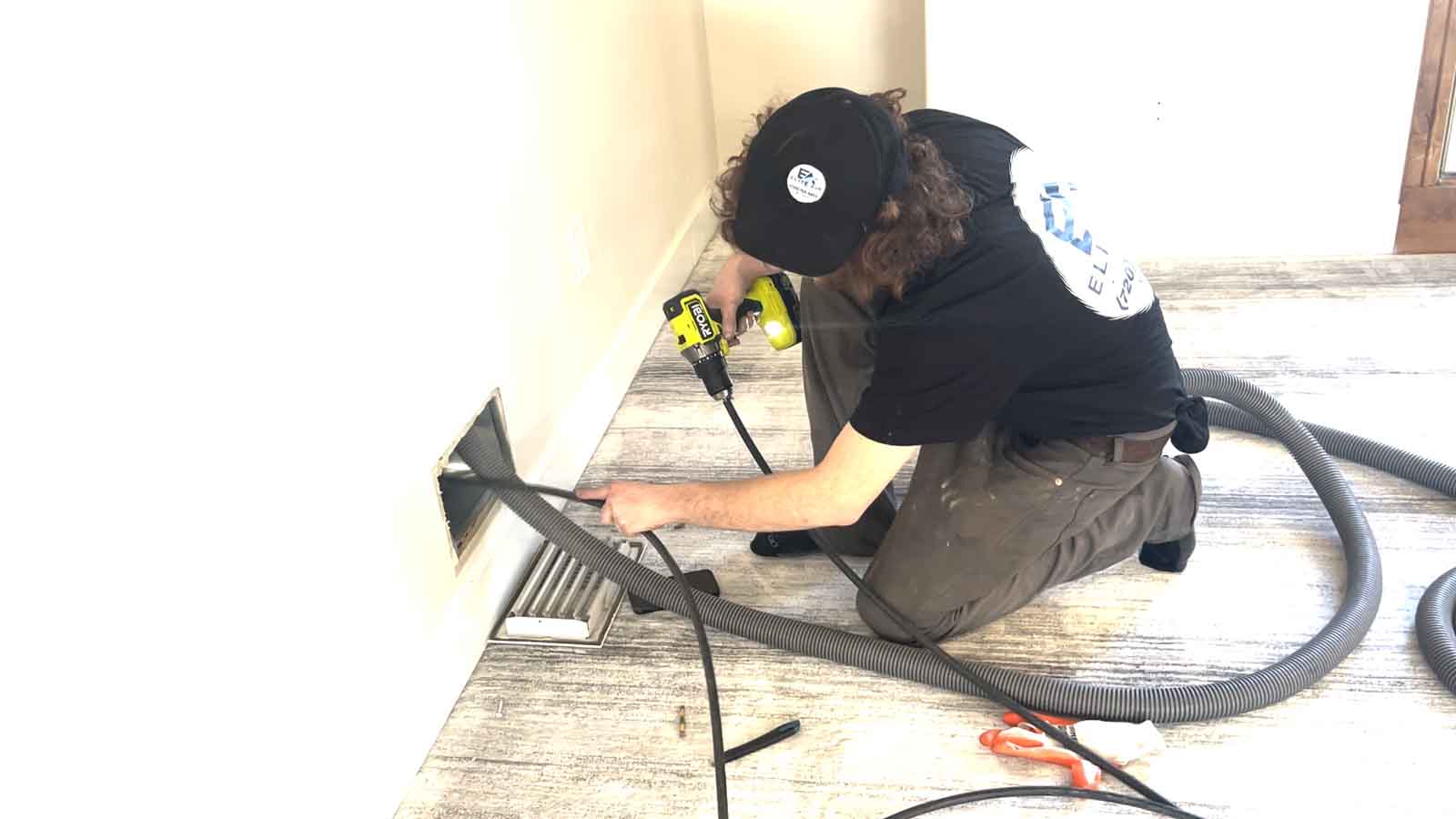
The fix is boring and effective: a deeper media filter (4–5 inch) in a sealed cabinet, checked monthly during windy seasons, plus a blower inspection every year or two. If your current setup is a 1-inch filter in a loose rack, you're filtering some of the air some of the time. A fall visit under our furnace services includes the blower and filter-rack check alongside the combustion work.
Hard Water, Humidifiers, and High-Efficiency Furnaces
Brighton-area water — municipal and especially well — runs hard, and hard water quietly attacks two pieces of HVAC equipment. First, bypass humidifiers: mineral-loaded water crusts the evaporator pad into a chalky brick that stops humidifying and starts breeding standing-water problems.
"Brighton well water and humidifiers don't mix without maintenance. We've pulled humidifier pads that looked like coral reefs. Swap the pad every fall — it's a ten-dollar part." — the Elite Air Duct crew
Second, condensing furnaces: high-efficiency units produce acidic condensate that must drain freely, and mineral scale plus dust makes Brighton condensate traps clog more often than city ones. A blocked trap shuts the furnace down on a pressure fault — usually on a cold morning. Both items take minutes to service and appear on our fall checklist by default.
Homes on propane east of town have one more wrinkle: furnaces converted from natural gas need the correct orifices and pressure settings for propane at altitude. A bad conversion runs rich, soots up, and shortens heat exchanger life — worth verifying if you've ever had soot streaks or a rotten-orange flame.
Brighton's Housing Mix and What Each Era Needs
A quick map of the city's stock and its typical furnace priorities:
| Area / Era | Typical Setup | First Priority |
|---|---|---|
| Historic in-town blocks (pre-1950) | Retrofit furnace, patchwork ducts | Duct sealing and combustion safety check |
| Postwar to 1980s neighborhoods | Second/third furnace, original ducts | Repair-vs-replace math, duct inspection |
| 1990s–2000s subdivisions | Mid- or high-efficiency, aging AC | Condensate service, coil cleaning |
| Newer builds (Prairie Center area) | Builder-grade high-efficiency | Commissioning check, warranty registration |
| Semi-rural acreage | Propane or NG, well water, heavy dust | Media filtration, humidifier service |
Across all of them, Colorado constants apply: 40-to-50-degree daily swings that stress ignition systems with frequent cycling, and altitude that requires furnaces be derated for thinner air. The U.S. Department of Energy's estimate that duct systems lose 20 to 30 percent of their air to leakage lands hardest on the older in-town homes — sealing is the cheapest comfort upgrade on that side of the city.
Cooling Season and the Cottonwood Weeks
Brighton summers are hot, exposed, and — thanks to the South Platte corridor running right through town — heavy with cottonwood. For a stretch of June, drifting fluff mats over condenser coils and AC performance drops exactly when the first heat wave hits. A gentle garden-hose rinse with the power off clears light accumulation; coils that have caked need proper cleaning.
Indoors, the same dust that kills blowers also fouls the evaporator coil above your furnace, and a fouled indoor coil steals cooling capacity invisibly. If your AC has lost ground over a few summers with no obvious cause, evaporator coil cleaning is often the missing maintenance. And keep the dryer vent on the annual list — wind-driven dust plus lint builds up fast in semi-rural runs.
A Brighton Furnace Calendar That Works
- September–October: furnace tune-up, humidifier pad swap, condensate trap cleaning, CO detector batteries
- Monthly in winter: filter check — 20–45 days on acreage, 60–90 with a media cabinet in town
- June: condenser rinse after the cottonwood peak
- Every 2–3 years: blower wheel and evaporator coil inspection; duct inspection for pre-1980 homes
A note for the evaporative-cooler holdouts: swamp coolers still make sense on some Brighton acreage — cheap to run and well suited to dry air — but hard water is their enemy too. Pads scale up fast on well water, and a neglected cooler dumps humidity and mineral dust into the house. If yours needs new pads every season and the media never lasts, a bleed-off kit or a switch to refrigerated air is worth pricing out honestly.
Neighboring Commerce City fights industrial particulate where Brighton fights farm and road dust — different sources, same lesson: match the maintenance schedule to the air, not the averages.
Frequently Asked Questions
How often does a Brighton furnace need professional service?
Once a year, in the fall. Acreage properties with heavy dust exposure benefit from a mid-winter filter-and-blower check as well, since dust load is the main thing that ages equipment out here.
Does hard water really affect my furnace?
Indirectly but reliably. It crusts humidifier pads, scales condensate paths on high-efficiency furnaces, and creates shutdowns from clogged traps. Annual service of both items prevents nearly all of it.
My furnace is converted to propane. Anything special to watch?
Yes — confirm the conversion used proper orifices and gas pressure for propane at altitude. Soot, orange flames, or a sulfur smell during operation mean the burn is off and needs professional adjustment promptly.
What should I do before calling about no heat?
Check the thermostat setting, the filter, the furnace power switch and breaker, and — on high-efficiency units — that the outside intake and exhaust pipes aren't blocked by snow or wind-blown debris, which Brighton's open-plains gusts deliver more often than you'd think. If those pass, call rather than repeatedly restarting it.
How do daily temperature swings affect my ignition system?
Frequent cycling. When mornings start near 20 and afternoons hit 65 — a normal Colorado spread — the furnace lights and shuts down many more times per day than in steadier climates, which wears igniters and flame sensors faster. That's why those two parts top our replacement list every fall.
Do you come out to properties east of Brighton?
Yes — we serve Brighton proper and the surrounding semi-rural areas; see our service areas for the full coverage map. Estimates are free and quotes are written.
Furnace Help That Fits How Brighton Actually Lives
Whether you're on a city block near the county offices or on five windy acres past the river, the goal is the same: a furnace that starts every cold morning without drama. The path there is dust management, water-aware maintenance, and honest repair math — not a bigger unit.
Elite Air Duct has served the Denver metro since 2014, licensed and insured. Call (720) 551-5882 or set up a free estimate — and mention your Broncos flag for 10% off.